Cybersecurity · Week of Nov 16, 2026
SBC Medical, Colla Health report breaches: the week in cybersecurity
Nozomi Networks, Colla Health, Beazley Security, Zimperium, Humanix and OrcaRouter: breach disclosures, threat reports and tools aimed at AI-driven attacks.
Two breach disclosures led the week. SBC Medical Group Holdings says attackers extracted personal information on 1,624,000 individuals from databases run by its Japanese subsidiary, and Colla Health says data may have been taken through Metabase, a third-party application it uses. Both involve health-related businesses. Beazley Security's Q3 report says healthcare remained the sector most affected by ransomware, with 21% of its investigated cases.
AI-driven attacks were the other common thread. Beazley Security details an intrusion carried out largely by coordinated AI agents, and Zimperium says generative AI is helping mobile malware evade detection. On the defensive side, OrcaRouter launched a platform meant to deceive autonomous offensive AI agents, and Humanix released a feature aimed at voice-based social engineering at the service desk. In defense, Nozomi Networks announced a co-development project with Lockheed Martin, and Elbit Systems reported higher third-quarter revenue.
Elbit Systems Ltd.
ELBIT SYSTEMS REPORTS THIRD QUARTER 2026 RESULTS
Elbit Systems reported third quarter 2026 revenues of $2,252.1 million, up from $1,921.6 million a year earlier, with GAAP diluted EPS of $3.70 and an order backlog of $33.0 billion. The company says it expects high-teens revenue growth in 2027 and declared a dividend of $1.00 per share, payable January 4, 2027.
SBC Medical Group Holdings Inc
SBC Medical Group Reports Cybersecurity Incidents in Japan
SBC Medical Group Holdings says unauthorized access on November 16, 2026 to databases at its Japanese subsidiary exposed basic personal information for 1,624,000 individuals and approximately 20,000 employee account records, with a separate incident on the third-party reservation service Tribeau. The company says the method of intrusion and the full scope of both incidents remain under investigation.

Nozomi Networks
Nozomi Networks Lands Co-Development Project with Lockheed Martin to Strengthen Cybersecurity for Government and Defense Environments
Nozomi Networks says it will co-develop automated security configuration assessment capabilities with Lockheed Martin, initially mapped to DISA STIGs, as an offset project tied to the F-35 sale to Switzerland. The project is aimed at government and defense organizations that, according to the release, often rely on spreadsheets and manual validation for configuration compliance; no availability date was given.
Colla Health, Inc.
Notice of Data Security Incident
Colla Health says an unauthorized party accessed Metabase, a third-party application it uses, and that personal and protected health information, including Social Security numbers, may have been taken; it became aware of the access on or around August 18, 2026. The substitute notice covers the company and a group of oncology and hematology practices, and the company is offering complimentary credit monitoring to affected individuals.
Humanix.ai
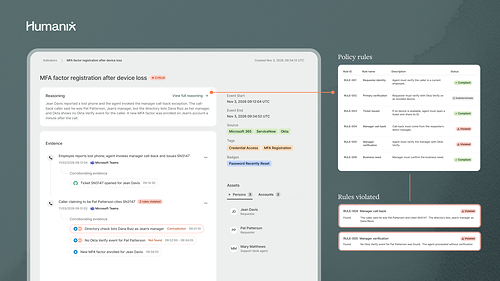
Humanix Launches Complete Call Context to Expose Voice-Based Social Engineering at the Service Desk
Humanix launched Complete Call Context, which the company says creates a micro-agent for each sensitive service desk request, such as an MFA reset, and checks the call against IdP and ITSM records to flag voice-based social engineering. The release cites Mandiant's M-Trends 2026 ranking vishing as the second most common initial infection vector, and the feature is available now to Humanix customers.
Beazley Security
Ransomware incidents surged 38% in Q3
Beazley Security's Q3 2026 Quarterly Threat Report says ransomware incidents rose 38% from Q2, and that exploited vulnerabilities were the initial access point in 28% of its ransomware cases, up from 14%. The report also describes an intrusion carried out largely by coordinated AI agents that stole data after patching and MFA blocked earlier attempts.

Zimperium
Zimperium's 2026 zLabs Year in Review Exposes AI-Assisted Mobile Malware, Device Takeover and Enterprise Mobile Threats
Zimperium's 2026 zLabs Year in Review, based on eight investigations, says generative AI helps mobile malware interpret device interfaces and avoid detection, and it identifies 608 websites loading Coruna-family code linked to iOS exploitation. Named threats include PixRevolution, RecruitTrap, Mantax Otax and Arsink RAT.
OrcaRouter
OrcaRouter Launches Shield: Active Deception Against Autonomous Agents Like ARTEX, Strix, CyberStrike, Cairn and PentestAgent etc.
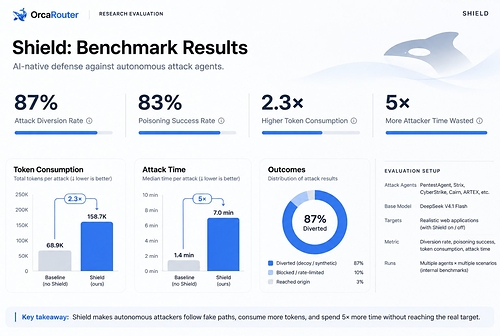
OrcaRouter launched Shield, which the company says diverts autonomous offensive AI agents into synthetic environments with decoy credentials and poisoned responses. It reports an 87% attack diversion rate in internal benchmarks against agents including ARTEX and Strix, and states these results are not guarantees of performance against every attack.
This roundup is written with AI assistance from the press releases listed above, using only what they state. The releases are the companies' own announcements, not NullByte Dev reporting.